
Supporting young children at the earliest stages of development.
Our early intervention programs help build strong foundations in communication,
learning, behavior, and social skills.
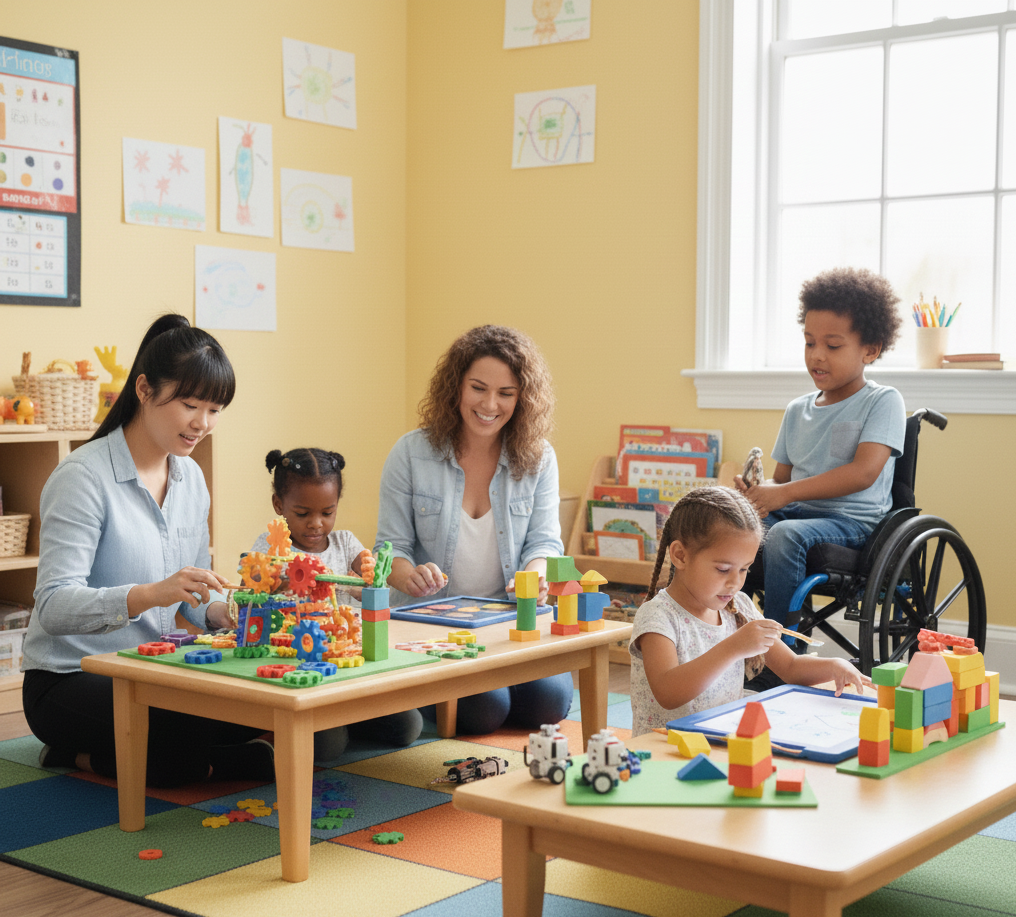
Thoughtfully designed programs that support learning, focus, and confidence at early stage
Enhancing communication, vocabulary, understanding, and expressive language in young children.
Improving attention, memory, problem-solving, and early learning readiness skills.
Supporting fine and gross motor skills through play-based and movement activities.
Helping children develop interaction, emotional regulation, and positive behavior patterns.
A thoughtful, family-focused approach aligned with key developmental stages in early childhood.
Structured play activities that support communication, learning, and emotional growth.
Parents and caregivers actively participate in goal setting and daily support routines.
Progress is tracked regularly to refine strategies and ensure steady development.
Eye contact, babbling, responding to sounds, early motor movement and bonding.
First words, simple instructions, imitation, play skills, and early social interaction.
Sentence formation, pretend play, problem-solving, emotional expression.
Pre-academic readiness, attention skills, peer interaction, confidence.
Reading picture books strengthens language and listening skills.
Music and repetition help improve speech and memory.
Puzzles and pretend play support thinking and creativity.
Predictable routines build independence and emotional security.
Noticeable improvement in speech and interaction within months.
Children develop confidence and stronger social skills.
Smoother transition into preschool and kindergarten.
Observe Early Signs: Early identification allows timely support.
Be Patient: Every child develops at their own pace.
Learn Through Play: Play is the most effective early learning tool.
Communicate Regularly: Stay connected with therapists and educators.
Timely support builds stronger learning foundations and long-term confidence.
Early intervention improves cognitive, emotional, and academic development significantly.
When learning challenges are addressed early, children gain confidence and independence.
Consistent guidance and collaboration between parents and educators unlock a child’s full potential.
Your child’s journey of growth and confidence starts here.
Connect with us to learn more about our personalized occupational
therapy programs.